Northwest Arkansas is one of the fastest-growing regions in the United States. Over the span of decades, it has transformed from a quiet corner of the Ozarks into a metropolitan area on track to reach one million residents by 2050. That growth brings both opportunity and pressure. Roads, housing, stormwater systems, and regional governance all face demands that outpace what any single city or agency can handle alone.
This fall, FUSE is proud to partner with five agencies in the Northwest Arkansas region on seven projects as part of our Fall 2026 cohort. Each fellowship embeds an experienced FUSE Executive Fellow inside local government to tackle a specific, pressing challenge, bringing new capacity, fresh perspective, and dedicated focus to work that matters. Below, we’re spotlighting the partners and people behind this work.
City of Rogers: Closing the Housing Gap and Modernizing Stormwater Management
Projects: Establishing a Stormwater Utility for the City of Rogers | Delivering Missing-Middle Housing through Small-Scale Development
Rogers is tackling two of the most consequential pressures that accompany rapid growth: affordable housing for working families and stormwater infrastructure that can keep pace with new development.
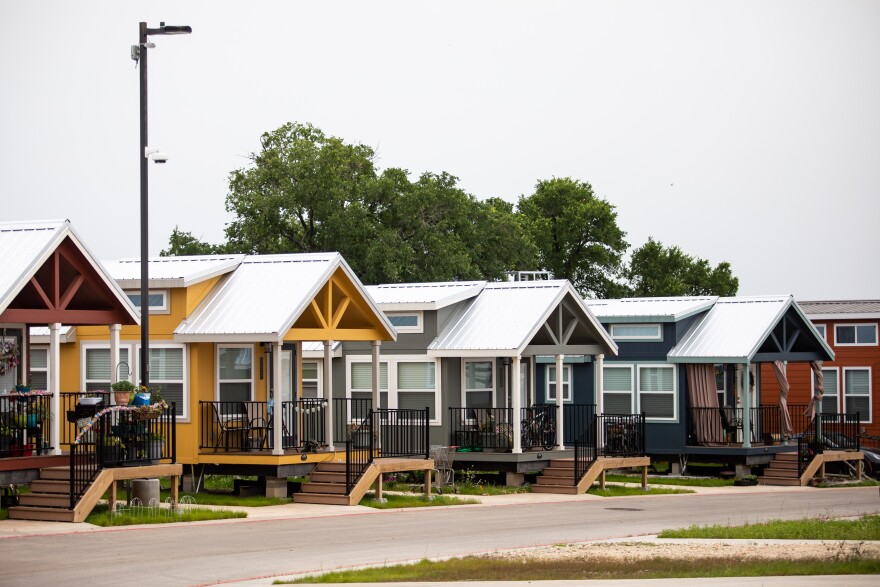
On the housing side, the City is scaling its Pattern Zones program, which offers more than 23 free and pre-approved residential building plans to reduce design costs and permit processing time, making it possible for anyone to become a housing developer. A FUSE Executive Fellow will help launch and grow this program by aligning builders, financing partners, utilities, and internal City workflows to translate policy into actual homes on actual lots.
On the water side, Rogers is evaluating a dedicated stormwater utility as a way to fund stormwater infrastructure more sustainably as the city grows. A second FUSE Executive Fellow will help develop the organizational, financial, and legal groundwork to assess that model and strengthen the city’s flood resilience.
We spoke with John McCurdy, Director of Community Development for the City of Rogers, about what’s driving this work.
What made this work feel urgent?
“Watching an ordinary house in Rogers move out of reach for the people who keep the city running — the teachers, the tradespeople, the young families who grew up here. Northwest Arkansas is growing fast, and the missing middle, the duplexes and small-scale housing that used to be normal to build, had quietly stopped getting built. Closing that gap is the work.”
What does it take for a city to genuinely welcome outside expertise?
“Humility and a clear problem. You have to be willing to say out loud what you have not solved on your own, then give an outside expert real access and real room to work, not a desk in the corner. For us that meant naming the housing problem plainly, with the Mayor’s backing and a defined scope, and bringing in a fellow with the time and independence to work it across departments.”
How do you hope this changes the way the city approaches complex problems?
“I hope it leaves us with a habit, not just a deliverable. Take a hard, cross-cutting problem, give it dedicated capacity, and work it with an outside perspective, instead of squeezing it into someone’s already-full plate. If that becomes how we take on the next one, the fellowship will have more than paid for itself.”
About John McCurdy

John McCurdy has been the Director of Community Development for the City of Rogers since 2017, leading planning, development review, building services, and a technical services division he created. A Rogers native, he has grown the department from eight staff to more than thirty and has put housing near the center of its work. His signature achievements include the 2024 Unified Development Code, which is Rogers’ first full code overhaul in decades, a $190 million transportation program centered on complete streets and connectivity, and the award-winning Railyard Park, designed with Ross Barney Architects. McCurdy is accredited by the Congress for the New Urbanism (CNU-A) and serves on the American Planning Association’s national lobbying team. Before city government, he served 32 years in the U.S. Air Force, retiring as a Colonel.
City of Centerton: Growing a Downtown, Managing Water
Projects: Building a Downtown Economy through Data-Driven, Strategic Growth | Stormwater and Floodplain Systems Modernization
The City of Centerton is a community in motion. Rapid residential growth has made it one of the fastest-developing cities in Arkansas. With that growth comes both opportunity and obligation. Centerton is working on two parallel challenges: building the commercial and economic infrastructure its residents want and modernizing the stormwater and floodplain systems that protect them.
For the economic development fellowship, a FUSE Executive Fellow will help the City build a data-driven strategy to attract and retain businesses that keep revenue dollars local, so residents don’t have to leave town for everyday needs. For the stormwater fellowship, the focus is on streamlining permitting, improving inter-agency coordination, and tackling the larger regional detention projects that smaller fixes can’t solve.
We heard from Alan Craighead, City Engineer for the City of Centerton, about what’s at stake.
What made this work feel urgent?
“It wasn’t one specific moment that made this work feel urgent to us but hearing the same two concerns come up again and again from residents, stakeholders, and community members. One was about the lack of stock and variety of commercial development in the City. Citizens want businesses that provide certain services or products so they do not have to leave the City, such as entertainment, restaurants and retail shops. The second concern was that there were multiple stormwater and flooding issues that the City has dealt with on a consistent basis. Both Lorene Burns, the Planning Director, and I have other job titles and duties outside of flood administration. As such, we have not had the time or resources to address some of the problems in the last few years. Having someone that can work on resolving some of these larger issues, as well as streamline the in-house administrative process, will help serve the community and improve compliance with FEMA regulations.”
How does the community stand to benefit most from this work, and how are you making sure their perspective is included in shaping it?
“From an economic development standpoint, the community benefits with any development that allows citizens to access goods and services, thereby keeping revenue dollars within the city. Picture it as being able to go to one generalized area to do your grocery shopping, pick up prescriptions, get tools for a weekend project, and get a meal; all along the same access drive rather than driving around town or to another town.
The floodplain issues affect the whole City. The City currently participates in the National Flood Insurance Program (NFIP) and the Community Rating System (CRS), which provides homeowners and businesses with a 15% discount on flood insurance premiums based on the City’s CRS ranking of 8. By enhancing and streamlining the permitting process and providing regional detention, stormwater control can be improved for better protection of homes and businesses.”
If a resident asked what actually changed in this city 5–10 years from now, what would you want to be able to tell them?
“In 5–10 years, we would want to be able to tell the residents that they no longer need to leave the City in order to find the goods and services that they want since they have options closer to home. When going out during a storm event, they will see fewer issues with flooding along the roads and road closures. If they happen to live in or near regulated floodplains, their permitting will be completed in a timely manner, and they will see the added cost savings and benefits from our participation in the NFIP and CRS programs. Through the additional work performed through the FUSE Fellowship Grant Program, our rating will improve and residents will see a greater discount in their premiums.”
Working with outside consultants and executive fellows provides the insight from industry professionals that are not typically available to the City on a daily basis. Outside perspective allows trying initiatives that may not be typical standard for the City so that the City can improve upon what is considered as standard approaches. It also provides a larger network to consult and work with when there are more complex issues. FUSE is a nationwide partner with contacts across multiple disciplines that can provide different views on some of these problems, as well as potential experience having worked through something similar in the past. Having a national ‘database’ and contacts that we can draw from provides more opportunity to find the most beneficial ways to improve and protect the City.
Alan Craighead, City Engineer for the City of Centerton
City of Bentonville: Building Flood Resilience
Project: Building a Stormwater and Floodplain Framework and Implementation Plan to Support Resilient Growth
Bentonville is working to translate rapid growth into safer neighborhoods and long-term infrastructure resilience. The FUSE Executive Fellow will lead cross-departmental coordination to establish a clear citywide stormwater framework, aligning infrastructure planning, land-use policy, parks integration, and regional coordination to reduce flood risk and support resilient development. Year One of this two-year fellowship focuses on discovery and framework development; Year Two focuses on scaling solutions and embedding sustainable watershed management practices within City operations.
Northwest Arkansas Regional Planning Commission: Governing a Region in Motion
Projects: Scaling Regional Infrastructure Through Systems Innovation | Strengthening Regional Transportation Governance and Mobility
The Northwest Arkansas Regional Planning Commission (NWARPC) sits at the center of one of the most dynamic regional growth stories in the country. With the region on track to reach one million residents by 2050, the stakes for getting regional governance right across transportation, infrastructure, and coordination have never been higher.
Two FUSE Executive Fellows will be embedded at NWARPC this cohort. The first will help the Commission modernize internal operations, clarify strategic direction, and build a coordinated external communication framework that supports regional alignment and long-term infrastructure investment. The second will work to advance long-term regional transportation governance by exploring and defining a clear pathway to enhance the Northwest Arkansas Regional Mobility Authority (RMA) ‘s impact in supporting equitable mobility and economic growth across the region.
Together, these fellowships are designed to build the institutional capacity NWARPC needs to serve as an effective backbone for a region that is growing faster than its systems.
We spoke with Nicole Gibbs, Assistant Director and Transportation Programs Manager, and Tim Reavis at NWARPC about what this moment means for the region.
What made this work feel urgent?
“The urgency became clear during Forward 2050, the region’s long-range transportation plan, when projections showed Northwest Arkansas surpassing one million residents within a generation and nearly doubling its population in a 30-year timeframe. As a polycentric region without a core city, Northwest Arkansas has a long history of collaboration, innovation, and shared regional problem-solving. But reaching this scale requires a different level of coordination, transparency, and institutional readiness.
As both the Council of Governments and Metropolitan Planning Organization, NWARPC plays a central role in that transition. We recognize that the region is at an inflection point: continued success will depend on strengthening the governance frameworks that support regional mobility and modernizing the internal systems that help us coordinate investments across 39 jurisdictions. These dynamics aren’t signs of concern; they’re signs of maturation. They illustrate a region growing in complexity and readiness for the next chapter of coordinated regional action.”
Beyond this project, how do you hope working alongside a FUSE Executive Fellow will change the way your region approaches complex problems long after the fellowship ends?
“Working alongside a Systems Innovation Fellow gives NWARPC the opportunity to strengthen not just our tools, but our entire approach to regional problem-solving. Modernizing project management systems, financial tracking, communication practices, and organizational workflows will leave us with durable capacity to manage increasingly complex regional initiatives.
Long after the fellowship ends, we hope this work strengthens both our internal systems and our external coordination with regional partners, enabling clearer processes and more accessible communication around shared priorities. Ultimately, this fellowship is about building institutional readiness. It will help NWARPC continue to proactively respond to regional needs, steward public resources effectively, and support the level of coordinated regional action required to meet the demands of a growing, polycentric region.”
What does it take for a region to genuinely welcome outside expertise?
“Welcoming outside expertise requires clarity around regional priorities, a willingness to challenge assumptions, and a shared commitment to collaborative problem-solving. Strengthening regional transportation governance is a complex challenge spanning jurisdictions, funding structures, legal frameworks, and public accountability.
The Regional Governance & Mobility Fellow brings an opportunity for dedicated capacity, an objective perspective, and a structured approach to navigating decisions that will shape the region for decades. They will help convene stakeholders, assess governance and funding pathways, and develop public-facing materials that support transparency and a clear path forward. Their role is not to prescribe solutions, but to help the region make informed, community-driven choices. Ultimately, this partnership means strengthening the collaborative foundation that enables Northwest Arkansas to advance a transportation governance model capable of delivering infrastructure effectively across a growing region.”
About Nicole Gibbs
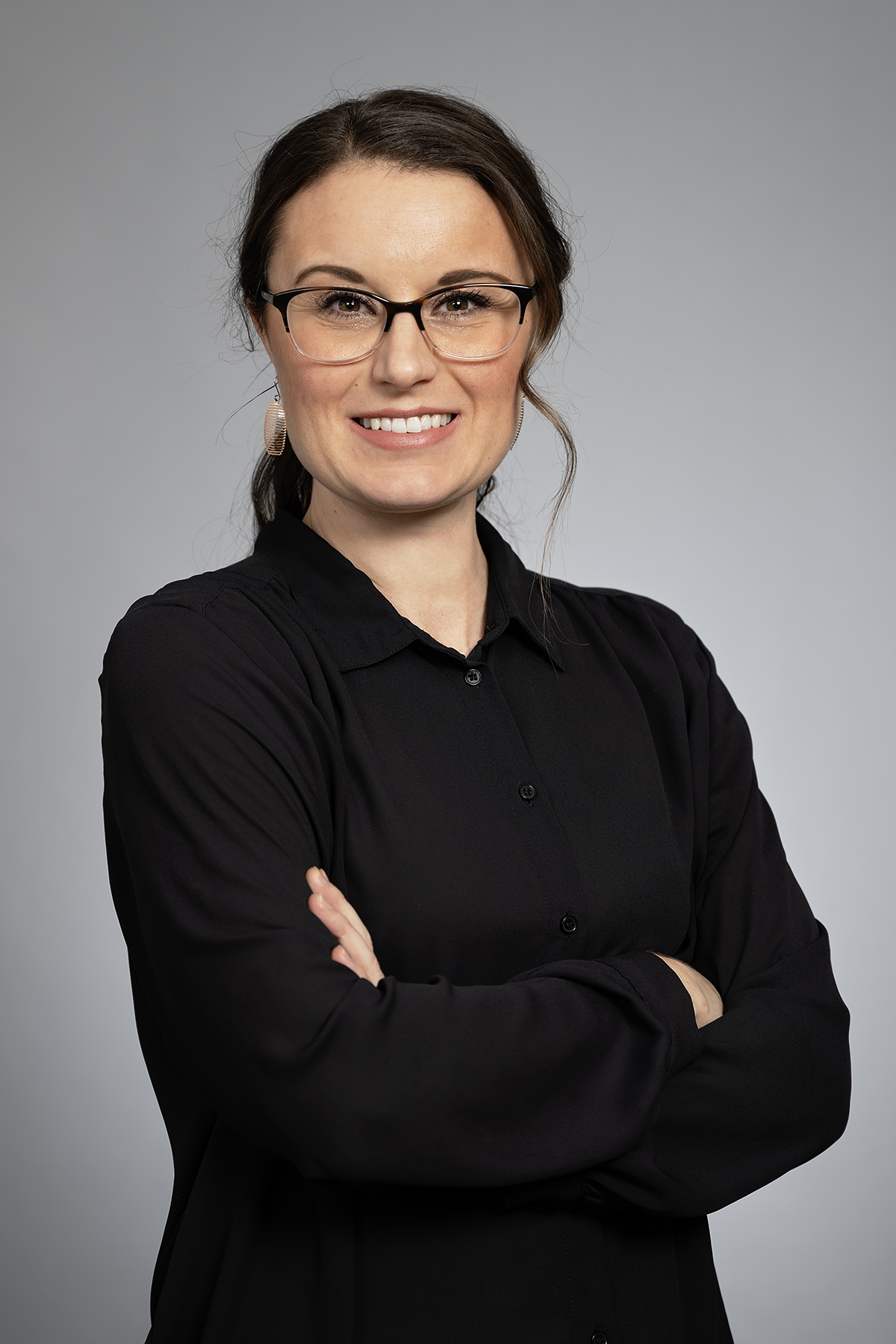
Nicole Gibbs, AICP, is Assistant Director and Transportation Programs Manager for the Northwest Arkansas Regional Planning Commission (NWARPC), where she helps shape the region’s long-term approach to transportation, infrastructure investment, and regional governance. She leads initiatives that bring together local governments, state and federal agencies, and community partners to advance strategic infrastructure investments and coordinated solutions for one of the nation’s fastest-growing metropolitan regions. Her work focuses on translating long-range vision into implementation by strengthening partnerships and building the institutional capacity needed to support sustainable growth. She holds a Master of Science in Planning and a Graduate Certificate in Heritage Conservation from the University of Arizona and is a member of the American Planning Association (APA) and the American Institute of Certified Planners (AICP).
About Tim Reavis

Tim Reavis, AICP, is the Senior Multimodal Transportation Planner for the Northwest Arkansas Regional Planning Commission (NWARPC), where he works with local governments and regional partners to develop strategies that improve mobility options, support informed investment decisions, and respond to the needs of a growing region. He contributes to key initiatives, including grant development efforts, the NWA Transit Alternatives Study, and Forward 2050, the region’s long-range transportation plan. With more than a decade of planning experience in Arkansas, Reavis brings a regional perspective to transportation and land use planning, helping communities navigate complex growth challenges through data-informed decision-making and collaborative planning. He holds a Master of Public Administration from the University of North Carolina at Chapel Hill and is a member of the American Planning Association (APA) and the American Institute of Certified Planners (AICP).
A Region, Rising
These seven projects reflect something important about Northwest Arkansas: the challenges here are real, complex, and interconnected. Housing, water, commerce, transportation, and governance don’t exist in silos, and the communities working on them aren’t working in isolation either.
That’s what FUSE is built for. By embedding experienced leaders within local government, we help cities and regions build the capacity to do the work that’s been waiting, creating long-term impact for years beyond the fellowship’s duration.
We’re proud to be part of Northwest Arkansas’ next chapter, and grateful to the partners who are opening their doors and their work to make it possible.
Interested in bringing a FUSE Executive Fellow to your community? Learn more and partner with FUSE.
Are you an experienced leader ready to take on a challenge like this? Explore current fellowship openings.