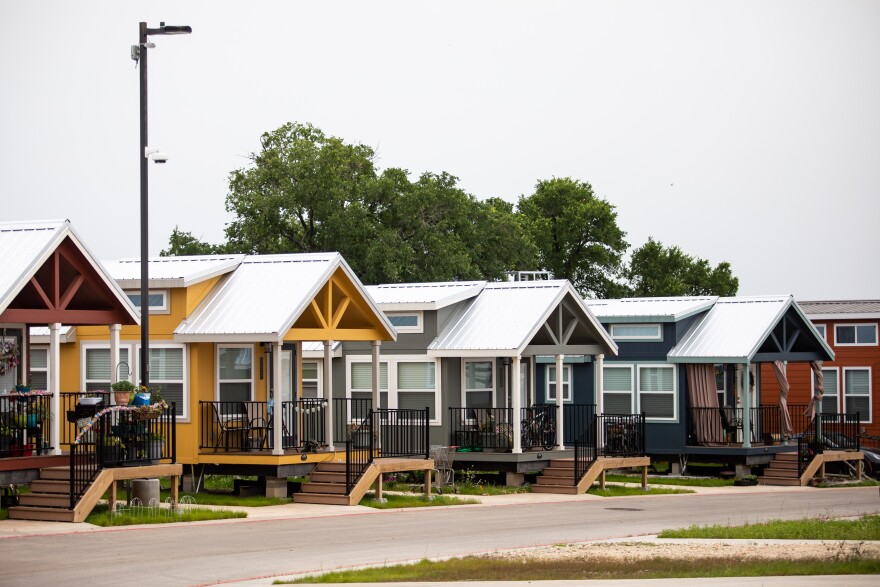
Spartanburg, South Carolina, is a city with a rare kind of track record. The nationally recognized revitalization of its Northside neighborhood showed what sustained, cross-sector, place-based investment can actually produce when partners stay aligned over years rather than budget cycles. Movement 2030 gave the community a shared strategic framework for economic mobility. And the Spartanburg Academic Movement (SAM) has spent years documenting, in local data, the link between housing instability and children’s academic outcomes.
What Spartanburg has not yet had is the dedicated capacity to turn all of that into a single housing strategy and a moving pipeline of homes.
This fall, FUSE is partnering with the City of Spartanburg and SAM on two complementary FUSE Executive Fellowships designed to close exactly that gap. One FUSE Executive Fellow will build the citywide strategy and the coalition behind it. The other will help advance a pipeline to build housing. The two are launching simultaneously, and the fellows are expected to work in close coordination, so that strategy informs the pipeline and the pipeline grounds the strategy.
City of Spartanburg & Spartanburg Academic Movement: Strategy and Supply, Together
Project: Building a Unified Housing Strategy to Expand Economic Opportunity
The fellow will synthesize Spartanburg’s substantial body of existing work, including community engagement processes, a racial equity index, an economic mobility analysis, and an emerging state-of-housing report, into one accessible, cross-sector-endorsed housing strategy. That means shared goals, affordability targets across rental and homeownership, measurable outcomes, a public narrative residents and investors can engage with, and a coordination structure that outlasts any single role. It also means preparing the City to make clear, data-supported investment asks in upcoming City and County budget cycles.
Project: Advancing a Mixed-Income Housing Development Pipeline in Spartanburg
The fellow will take Spartanburg’s growing list of priority development sites, including four candidates in the Highland neighborhood, and do the technical work of moving them toward reality: site-by-site feasibility assessments, project-level financial models with sources-and-uses analyses and cash flow projections, and direct engagement with mission-aligned developers and capital partners. Spartanburg is already building relationships with Community Reinvestment Act-focused banking partners and philanthropic investors; this fellowship provides a concrete investment opportunity.
Both fellows will be embedded in the City Manager’s Office. Below, we’re spotlighting the partners and people behind this work.
In Conversation: Chris Story, City Manager
Executive Sponsor for both fellowships; Project Supervisor for the housing pipeline project.
The Northside revitalization is such a powerful model. What element of that success are you most hoping to carry forward into the Highland work?
“Community engagement has been a notable strength in the Northside. The City invested significantly in a resident group dedicated to elevating community voices throughout the neighborhood planning and redevelopment process. Now known as the Voyagers, this group has provided a shared sense of ownership for community development efforts in the neighborhood, and they are deeply involved in both development projects and program implementation. We hope to replicate the success of the Northside model, and the Voyagers’ role in its success, throughout the city and especially in the Highland neighborhood.”
Spartanburg is launching two FUSE fellows simultaneously who are expected to work in close coordination. What does it mean to you that both the pipeline work and the strategy work are being advanced together, and why did that feel important?
“Linking the broader strategy to the pipeline work is precisely the approach to housing our community needs at this critical point in development. We are proud of our progress in producing housing and collaborating with professionals to deliver affordable housing in our communities with the limited resources we’ve been able to devote to the effort. We have also taken a proactive, data-informed approach to understanding housing challenges and have developed creative programs that combine market-rate and affordable housing. Articulating our efforts as a coherent, easily understood strategy that provides historical context for our current conditions and current efforts, clearly defines our goals, and notes the role of government and our partners in achieving those goals is needed. Support from FUSE will help us both plan for community housing needs and deliver tangible housing developments that serve families.”
What is something about Spartanburg that someone coming from outside would need to understand in order to do this work well?
“Spartanburg is a very collaborative community, and behind that long history of collaboration is a deep understanding that the challenges we face are too large for any single entity to manage alone. Our partnerships with organizations such as SAM, United Way, A Place to Call Home, and the county have given us expertise and on-the-ground knowledge across a whole range of challenges that cut across many disciplines. We couldn’t have achieved the results we’ve seen in those areas any other way. Our housing challenges are another example where this longstanding strength is the key to any future success we hope to achieve.”
About Chris Story
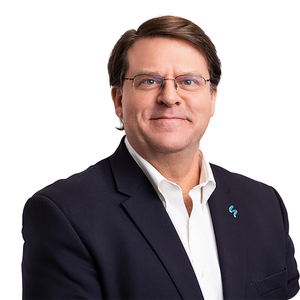
Chris Story has served as City Manager of Spartanburg since 2018. He has lived in Spartanburg since age 13, was educated in District 7 Schools, and graduated from Wofford College with a B.A. in Economics, followed by postgraduate coursework in business and public administration at Clemson University and the University of South Carolina. In the late 1990s, he served as Executive Director of Spartanburg Share the Vision, a City-initiated community strategic planning process. From 2000 through 2009, he served as Assistant County Administrator for Spartanburg County, overseeing all aspects of local government management, before returning to the City as Assistant City Manager in 2009.
In Conversation: Mitch Kennedy, Deputy City Manager
Project Supervisor for the unified housing strategy project.
The City has invested years in developing plans, gathering data, and engaging the community. What have been the challenges in moving from knowing what needs to happen to having everyone pulling in the same direction, and what do you hope changes by bringing in a FUSE Executive Fellow?
“The challenge has not been a lack of information or concern. Spartanburg has spent years identifying housing needs, collecting data, developing plans, and creating opportunities for community input. The harder part has been moving from shared awareness to a shared narrative that can lay the foundation for a housing strategy built around coordinated action. By bringing in a FUSE Executive Fellow, the hope is to create dedicated capacity to connect the work already underway, strengthen coordination among partners, and help translate plans into implementation. The goal is not to start over, but to help Spartanburg move toward aligned action.”
SAM has documented a direct connection between housing instability and children’s academic outcomes. How does that data shape what this housing strategy needs to accomplish for Spartanburg families?
“Housing instability has a significant impact on children in Spartanburg. When families face eviction, overcrowding, temporary shelter, or frequent moves, children often experience disruption in school attendance, transportation, health care, sleep, and daily routines. We’re fortunate that our local school districts understand this challenge, and SAM in particular has helped bring alignment and a shared sense of urgency to housing and community development between the education and local government sectors. Addressing housing instability is not only a housing issue; it is also an education, health, and community stability issue. SAM’s work makes that connection concrete.”
How will you know, 5–10 years from now, that this fellowship made a real difference in how Spartanburg invests in housing?
“The most obvious evidence would be if five years from now the leaders in our community and the residents we all serve have an understanding of both the challenges we have related to housing and the strategy we’ve articulated to address them. If, in five years, we have a shared vision for stable, affordable housing that serves our residents, and we can demonstrate specific successful tactics that are helping achieve that shared vision, we will be well on our way.
Over the next 10 years, we aim to build a strong network of developers, funding partners, and community stakeholders who can consistently create new housing opportunities, maintain existing housing, and expand affordability across Spartanburg. Experience from other communities shows that steady housing production can help stabilize or reduce rents and housing costs over time by increasing the availability of housing, and our goal is to demonstrate that success locally.”
Our goal is for Spartanburg to become a model for what an affordable growing community can be, demonstrating how a community can address housing instability and homelessness while easing the burden on residents searching for an affordable place to live.
About Mitch Kennedy
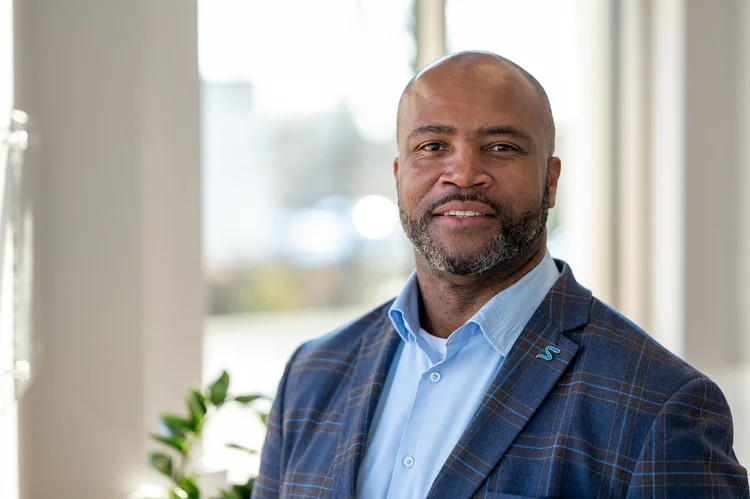
Mitch Kennedy is Deputy City Manager for the City of Spartanburg. Born and raised in Spartanburg, he is a graduate of Spartanburg High School and holds a B.A. in Communications from Wake Forest University. He began his career with the City in June 2005 as Director of Community Relations, was promoted to Assistant City Manager in 2019, and to Deputy City Manager in 2023. He currently administers the City’s community relations, public services, communications and marketing, minority business development, parks, recreation and special events, and strategic partnerships and initiatives, work he approaches with an emphasis on collective impact and a constant search for partnerships and collaborations.
A Community That Knows How to Work Together
What stands out about Spartanburg isn’t a shortage of plans or partners. It’s a community that has already proven in the Northside, through Movement 2030, alongside SAM, United Way, A Place to Call Home, and Spartanburg County, that it knows how to align around a hard problem and stay with it.
Housing is the next test of that muscle, at a moment when the city’s economic momentum makes the stakes real. Two fellows, working in tandem on strategy and supply, are how Spartanburg is choosing to meet it.
We’re proud to be part of that work and grateful to the partners who are opening their doors to make it possible.
Interested in bringing a FUSE Executive Fellow to your community? Learn more and partner with FUSE.
Are you an experienced leader ready to take on a challenge like this? Explore current fellowship openings.